Are Keter Sheds Combustible?
Yes, Keter sheds are combustible. Keter builds its sheds from polypropylene resin and steel, and polypropylene is a plastic that can catch fire and burn. The sheds resist weather and UV light, but the material itself is not fireproof.
On this page (9 sections)
- What does combustible mean for a resin shed?
- How does a Keter shed behave in a fire?
- Is a plastic shed more flammable than wood or metal?
- What makes a Keter shed more likely to catch fire?
- How should you store fuel and tools in a Keter shed?
- How do you reduce fire risk around the shed?
- What should you check before you buy a Keter shed?
- How does a Keter shed compare with Suncast on fire risk?
- What is the bottom line on Keter shed fire risk?
Yes, Keter sheds are combustible. Keter builds its sheds from polypropylene resin and steel, and polypropylene is a plastic that can catch fire and burn.
The sheds resist rain, rot and UV light, but the material is not fireproof.
That does not make a Keter shed dangerous on its own. Most shed fires start with what people store inside, not with the walls.
Knowing how the resin behaves helps you decide what belongs in the shed and what stays out.
What does combustible mean for a resin shed?
Combustible means the material can ignite and keep burning once a flame reaches it. Polypropylene is a petroleum-based plastic, so it burns when exposed to enough heat.
Keter says its resin sheds will not peel, rot or rust and that they carry UV protection. Those claims cover weather and sunlight, not fire.
A resin shed is not fire-rated and Keter does not present it as such.
The steel reinforcement inside the panels adds strength and shape. Steel does not feed a fire the way plastic does, but it also does not stop the resin from burning around it.
Treat the shed as a plastic structure, not a fireproof one.
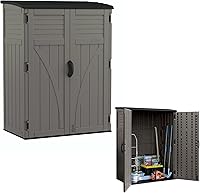
The three Keter models in this post share that base material. The Manor 4x6 has polypropylene resin and steel among its base materials and weighs 93.5 pounds.
The Factor 8x6 uses the same resin and steel combination at 150.7 pounds. The Premier Tall is built from resin reinforced with steel at 78 pounds.
A heavier panel is not a fire rating, so none of these weights tells you the walls are more fire-resistant than another Keter shed.
How does a Keter shed behave in a fire?
Thin plastic walls heat up fast and can soften before they burn. A fire beside or inside the shed stresses the resin quickly, and the panels can sag or melt.
Once the resin catches, it burns and gives off thick smoke. The smoke is the bigger hazard in a backyard: it is dark, hot and can spread toward a house or fence before the flames do.
Steel parts stay in place longer, so a burned shed often shows a metal frame standing among melted panels. That frame is not a sign the shed survived.
It just means the metal held while the plastic did not.
The Manor's skylight and window show how much plastic the structure actually contains. Both are resin parts set into the wall and roof panels, and windows are a weak point in any shed fire.
The vented design helps air move on a normal day, but in a fire those same openings feed oxygen to the flames.
Is a plastic shed more flammable than wood or metal?
Plastic and wood both burn, but plastic reaches ignition faster. Wood is thicker and chars as it burns, while a thin resin panel heats through quickly.
Metal sheds are the least combustible of the three, since the walls are steel. Even so, a metal shed holds the same lawn mower, fuel can and paint that start most fires.
The wall material matters less than the contents.
Compare this with the options in our guide to Lifetime vs Keter sheds if you are weighing resin against other materials. For a broader look at the category, see the best plastic storage sheds for a backyard.
What makes a Keter shed more likely to catch fire?
Fuel, heat and air inside the shed are the real risk. A spark or hot surface meets stored gasoline, and the closed space holds the flame.
Common culprits include:
- A lawn mower or trimmer with fuel left in the tank
- Gas cans, propane cylinders and paint thinners
- Oily rags piled in a corner
- Extension cords and chargers left plugged in
- A grill or fire pit set too close to the wall
Summer heat adds to the problem. A sealed resin shed traps warm air, and gasoline vapors build up faster in a hot, closed space.
Keter notes that its sheds are vented for air circulation, and those vents help fumes escape rather than collect.
A small shed fills up with fuel faster than you might expect. The Manor holds 131.8 cubic feet and the Premier Tall holds 62.05 cubic feet, so even a modest can of gas takes up a real share of the space and its vapors have less room to disperse.
The Factor's 285 cubic feet gives you more air volume, but it also invites you to store more equipment, including more machines with fuel still in the tank.
How should you store fuel and tools in a Keter shed?
Keep gasoline out of the shed, or empty the equipment before it goes in. That single habit removes most of the fire risk.
Run a mower until the tank is dry before storing it, or use a fuel shutoff and let the engine run out. Store any leftover gas in a labeled can outside the shed, away from the house, and never inside a closed plastic building.
Let tools cool before they go in. A hot muffler or a recently used grill can ignite debris on the floor.
Sweep out grass clippings and leaves so there is nothing loose to catch a spark.
Skip propane tanks and paint thinners entirely. Those belong in a ventilated spot away from the house, not in a resin shed.
Keter's own copy points to what these sheds are meant to hold. The Manor is pitched for patio furniture, garden tools, bike accessories, beach chairs and a push lawn mower.
The Factor adds pool toys and yard tools to the list. The Premier Tall mentions shelving brackets for tools and pool and bike storage.
None of that describes fuel storage, so treat gasoline and propane as items the shed was not designed to house.
How do you reduce fire risk around the shed?
Clear the area around the walls and keep the vents open. A clean perimeter gives a fire nothing to spread through and helps the resin stay cooler.
Move the shed away from overhanging branches and dry brush. Leave a gap between the shed and any fence, house wall or woodpile so air can move and debris cannot gather.
Don't block the door or the roof vents with shelving or stacked boxes. Keter builds the Manor and Factor sheds with vents near the roof to keep air moving, and that airflow matters for fumes as well as heat.
Check cords and chargers. Use outdoor-rated extension cords only for short jobs, unplug them when you are done, and never run a heater inside a plastic shed.
Which Keter shed fits a low-risk storage plan?
The Keter Manor 4x6 suits a small yard where you store tools, bikes and patio cushions rather than fuel. Its 131.8 cubic feet of space and vented window keep the interior airy.
The double front door makes it easy to pull a push mower in and out without wrestling it through a narrow opening, which matters when you want to park it empty rather than leave fuel sitting inside.
Which Keter shed suits larger gear?
The Keter Factor 8x6 gives you 285 cubic feet and a large double door for a riding mower or bulky furniture. Its roof vents help fumes and heat escape.
The folding doors open wide enough for a riding mower to roll straight in, so you can store the machine without leaving it half in the doorway where rain and debris collect.
Which Keter shed fits a narrow spot?
The Keter Premier Tall packs 62.05 cubic feet into a 55.1 by 29 inch footprint. Its shelving brackets let you keep small tools off the floor.
The brackets support up to two shelves, shelves not included, so you can lift hand tools and cords away from any spilled fuel or damp on the floor.
What should you check before you buy a Keter shed?
Check the material, the vents and your local rules before you order. Keter lists polypropylene resin and steel as the base materials on all three sheds above, so none of them is fire-rated.
Look at where the shed will sit. A spot near a fire pit, a grill or a brush pile raises the risk no matter which model you choose.
Pick a location with clear space on every side.
Read your homeowner policy if the shed will hold equipment. Some insurers ask about fuel storage in outbuildings, and a resin shed counts as an outbuilding.
Measure the ground first. A level base keeps the panels aligned and the door working, and our guide to what to put under a resin shed covers the base options in detail.
Keter backs all three sheds with a 5 year warranty against manufacturing defects that does not cover acts of nature. Fire damage falls outside that cover, so a burned shed is your loss, not a warranty claim.
That is one more reason to keep fuel out of the building rather than rely on the shell to contain a fire.
How does a Keter shed compare with Suncast on fire risk?
Both brands build from resin, so both are combustible. The difference comes down to wall thickness, vents and how the panels fit, not to a fire rating.
If you are choosing between the two, our Suncast vs Keter sheds comparison covers size, doors and assembly. Fire safety lands in the same place for both: keep fuel out and clear the perimeter.
What is the bottom line on Keter shed fire risk?
Are Keter sheds combustible? Yes.
The polypropylene resin can ignite and burn, and the steel frame does not change that. Keter's weather and UV claims describe durability outdoors, not fire resistance.
The practical rule is simple. Store tools and patio gear in the shed, keep gasoline, propane and thinners out, and leave space around the walls.
Do that and a Keter shed is a low-maintenance storage building for most yards.
Frequently asked questions
Are Keter sheds combustible?
Yes. Keter sheds are made from polypropylene resin reinforced with steel, and polypropylene is a combustible plastic.
The resin resists rain, UV light and rot, but it can ignite and burn if a fire starts nearby or inside the shed.
Is a resin shed more flammable than a wooden shed?
Both can burn, but they behave differently. Wood chars and burns slowly, while thin plastic walls can soften and spread flame quickly.
Neither material makes a shed fireproof, so storage habits matter more than the wall material.
Can I put a lawn mower with gasoline in a Keter shed?
It is risky. Gasoline vapors are highly flammable, and a closed plastic shed traps them.
Run the mower until the tank is empty or store fuel in a labeled can outside the shed, well away from the house and any ignition source.
Do Keter sheds need a fire-rated base?
Keter does not market its sheds as fire-rated, so a base will not change that. Clear the ground around the shed, keep doors and vents unobstructed, and avoid storing propane, paint thinners or other flammable liquids inside.
How close can a Keter shed sit to a fence or house?
Leave a clear gap on all sides so air can move and debris cannot pile against the walls. Local rules vary, so check your code for setback distances.
A gap also keeps the resin cooler in summer and easier to inspect for damage.