Storage Shed vs Storage Container: Which Is Better? (November 2026)
Pick a storage shed for everyday yard gear and a storage container for bulky, temporary overflow. In this storage shed vs storage container comparison, setup effort, weather protection and access matter more than raw size.
On this page (9 sections)
- Storage shed vs storage container: the quick verdict
- How each one sets up in your yard
- Which one protects tools from sun and rain?
- Which is easier to reach and organize?
- How much gear can each one hold?
- What does each one cost over time?
- Which one handles wind and weather better?
- Who should buy which?
- The verdict: storage shed vs storage container
Pick a storage shed for everyday yard gear and a storage container for bulky, temporary overflow. The storage shed vs storage container question comes down to setup effort, weather protection and how often you need to reach inside.
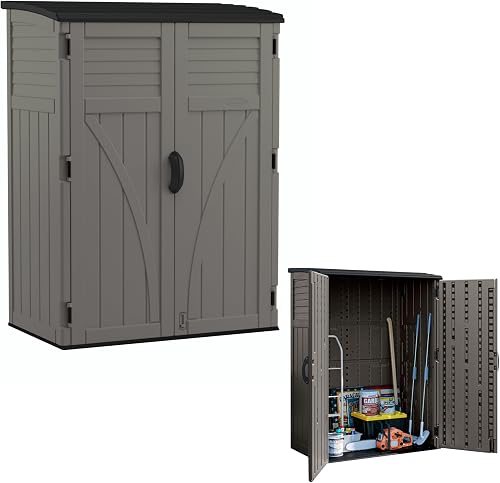
This comparison focuses on the practical differences between the two options. The two Suncast resin models shown here handle long-handled tools and seasonal gear.
A metal container suits bigger, short-term loads. Neither choice is wrong.
Your yard, your budget and your gear decide.

Storage shed vs storage container: the quick verdict
For most homeowners, a storage shed wins because it protects everyday tools and gear without needing a truck. A storage container makes more sense for a one-time cleanup, a renovation or overflow you'll clear within a season.
The two Suncast sheds here hold 54 cubic feet each. That's enough for rakes, shovels, hoses, patio umbrellas and a few bulky supplies.
A storage container can hold far more, but it needs truck access and usually sits where the truck can leave it.
The storage shed vs storage container call also depends on your base. A shed needs a level pad.
A container needs firm ground and room for the delivery truck. If your yard is narrow or gated, the shed is easier to place.
Both Suncast units are vertical cabinets rather than sprawling sheds. That shape is the reason they fit beside a house, on a patio or next to an existing garden shed.
It also keeps the footprint small while the height does the storage work. A container cannot match that fit in a tight yard.
| Product | Best for | Capacity | Size (D x W x H) | Opening | Our score |
|---|---|---|---|---|---|
| Suncast 54 Cu Ft Vertical Shed | long-handled tools | 54 cu ft | 32.5 x 41 x 71.5 in | Double doors, 46.25 in wide | 8.9 |
| Suncast Vertical Resin Shed | narrow side yards | 54 cu ft | 32.5 x 53 x 71.5 in | Double doors, lockable | 8.7 |
How each one sets up in your yard
A resin shed like the Suncast models goes up on a prepared pad in a few hours, while a container arrives on a truck and gets set down in one move. The setup trade-off is labor versus access.
The Suncast 54 Cu Ft Vertical Shed arrives as panels and assembles on a level base. Its multi-wall resin panels snap into place, and the floor comes included.
You still need a flat pad, so the ground has to be ready first.
A storage container needs a truck with a tilt-bed or crane to drop it. That means a clear path from the street.
Gates, low branches and soft ground can block delivery. Once it's set, there's no assembly at all.
For a buyer weighing the storage shed vs storage container decision, ask one question first: can a truck reach the spot? If not, the shed is the simpler path.
If yes, a container saves assembly time.
What to prepare before either one arrives
Clear the spot and level it. A resin shed sits square only on a flat base.
A container needs firm ground so it doesn't sink or twist. The Suncast floor rests on that base, so any dip under the panels shows up as a door that won't close cleanly.
Measure the delivery route for the container. For the shed, measure the pad and the door swing.
Leave room to walk around the unit. The Suncast doors are wide, so the swing eats real space in front of the cabinet.
What assembly actually asks of you
The Suncast build is panel by panel. Two people make it easier to square the walls before the roof goes on.
Set aside a few hours and pick a calm day, since tall panels catch wind during the build.
The container skips all of that. The trade is that you accept whatever placement the truck can manage.
If the driver can't line it up with your plan, you live with the spot you get.
Which one protects tools from sun and rain?
A shed with weather-resistant panels and an included floor keeps hand tools drier, while a steel container can sweat in humid weather. Protection depends on the material and the base.
The Suncast sheds use multi-wall resin panels with UV protection and water resistance. The resin lower latch helps keep the doors closed.
That combo suits hoses, hand tools and patio cushions that you want dry. The multi-wall build adds stiffness to the panels, which matters on a tall cabinet that takes wind on its broad side.
A steel container is sealed from rain when the doors close. But an unlined steel box can collect condensation when warm, humid air meets cold walls.
Tools stored against the wall can rust without airflow.
If dryness matters most, the storage shed vs storage container comparison favors the resin shed. If you're storing firewood or bulky equipment that tolerates some damp, either works.
Our resin vs metal shed comparison covers material durability in more detail.
Why the included floor matters for tools
The Suncast floor is reinforced and part of the unit. Gear never touches wet ground, so shovels and hoses stay cleaner.
The floor also spreads weight across the base instead of letting legs dig in.
A container's steel deck sits close to the ground. Damp creeps up through the metal unless the unit rests on blocks or a pad.
That is one more base detail to plan for.
Which is easier to reach and organize?
A vertical shed wins on everyday access because the double doors open wide and gear stands upright. A container gives you more room but often needs a step up and a reach inside.
The Suncast 54 Cu Ft Vertical Shed has double doors 46.25 inches wide. Long-handled tools stand upright and stay easy to grab.
Three sets of notches in 16-in. increments fit up to three shelves, sold separately. The door height reaches 66 inches, so most people can step in without ducking.
The Suncast Vertical Resin Shed is wider at 53 inches and still holds 54 cubic feet. That extra width helps with bulkier supplies while keeping a compact vertical footprint.
It also has shelf-ready notches.
A storage container is deeper and taller. You'll often walk up a ramp or step inside to reach the back.
That's fine for pallets and boxes you load once. It's less handy for a rake you grab twice a week.
For more on fitting a shed to a yard, see our Suncast vs Keter sheds guide.
Locking and daily security
Both Suncast models have padlock-ready lockable handles. The resin lower latch helps hold the doors shut.
A padlock adds a layer a storage container already has through its heavy steel doors.
The difference is what a lock protects. A shed lock guards tools you use all week.
A container lock guards a load you may not open for months. Match the lock to how often you need in.
How much gear can each one hold?
Both Suncast sheds hold 54 cubic feet, while a storage container scales much larger. The right size depends on what you store and how often you add to it.
The Suncast 54 Cu Ft Vertical Shed measures 32.5 inches deep, 41 inches wide and 71.5 inches tall. The taller model is built for long-handled tools, patio umbrellas and gardening supplies.
It also stores firewood and sporting goods. The floor area works out to about 12.7 square feet, so you are trading floor space for height.
The Suncast Vertical Resin Shed measures 32.5 inches deep, 53 inches wide and 71.5 inches tall. That extra foot of width gives you more room for bulkier items on the same footprint depth.
A storage container can run 20 or 40 feet long. That suits furniture, appliances or renovation materials.
But it's a lot of empty steel if all you need is a home for the lawn tools. Size up only when the gear demands it.
Pick a shed size by your tallest item
Measure your longest tool first. A tall shed keeps it upright and off the floor.
The 71.5-inch height clears most rakes, hoes and umbrellas.
If you store only short hand tools and cushions, a patio box may be enough. Our plastic storage shed roundup covers smaller options.
The two Suncast models here earn their height when long handles are part of the load.
Use the shelf notches to stretch the space
Three sets of notches in 16-in. increments let you add up to three shelves, sold separately. That turns half the cabinet into stacked storage for pots, hand tools and smaller supplies.
The top stays open for the tall gear. That mix is hard to match in an empty container.
What does each one cost over time?
A storage shed usually costs less upfront than a container, but both need a base and upkeep. Look at the total cost, not just the unit.
A small resin shed like the Suncast models sits in the budget to mid-range tier. It needs a level pad, which may mean a gravel base or a slab.
The resin panels don't need painting, and Suncast backs the shed with a 10-year limited warranty.
A steel container costs more to buy and more to deliver. It needs repainting over the years to stop rust.
If you rent the container, you pay monthly and clear it out when the rental ends. Buying one ties up more money for a load you may only need once.
The storage shed vs storage container cost picture flips if you need a lot of space for a short time. Rent the container for a move or a remodel.
Buy the shed for gear you'll keep for years.
The base cost nobody plans for
Both options need ground prep. A gravel pad for a 41-inch or 53-inch wide cabinet is a modest job.
A slab for a long container is a bigger one. Price the base with the unit, or the total surprises you.
Upkeep over the years
The Suncast resin finish is low maintenance. Wipe it down and check the latch and handles now and then.
Steel needs paint touch-ups and a watch for rust at the floor line. Neither is heavy work, but the resin asks less of you.
Which one handles wind and weather better?
A shed anchored to a level base handles wind well, while an empty container is light enough to shift in a serious storm. Weight and anchoring decide this one.
The Suncast sheds weigh about 99 and 102 pounds. That's light for a structure, so anchor the unit to its base and set it out of the windiest corner.
The resin panels flex in wind rather than dent like steel. The multi-wall panels and UV protection help the resin hold up to sun over the years.
A storage container is heavy and stays put once loaded. Empty, a container can still shift in extreme wind.
Follow the delivery company's advice on placement and tie-downs.
Neither option is a storm shelter. For a buyer in a windy area, anchor the shed or set the container in a sheltered spot.
Check local rules on anchoring either one.
Where to place either one
Put the shed against a wall or fence to cut wind and shade the resin. A container wants open space for the truck.
That difference often decides placement before the gear does. Pick the spot first, then the unit.
Who should buy which?
Buy the shed for tools you reach for all week; buy the container for a short, bulky load. Each one has a clear owner.
Who should buy a storage shed?
Choose a shed if you store lawn tools, patio umbrellas, hoses, firewood or sporting goods on a regular basis. The Suncast 54 Cu Ft Vertical Shed fits long-handled tools upright and keeps them off the ground.
The narrower 41-inch width suits a side yard or a patio corner.
Its reinforced floor and padlock-ready lockable handles suit everyday use. The compact vertical footprint works on a patio, in a backyard or beside a garden shed.
Pick the wider Suncast Vertical Resin Shed when bulkier supplies need more width. Its 53-inch frame still fits along a fence line while giving you more room at the door.
Who should buy a storage container?
Choose a container for a renovation, a move or seasonal overflow you'll clear within months. It holds pallets and large furniture that no 54-cubic-foot shed will fit.
It also needs a truck and a clear path.
Skip the container if your yard is gated or the ground is soft. The delivery cost and the space it takes up are hard to justify for a rake and a hose.
Our Lifetime vs Keter sheds comparison helps if you want a larger permanent shed instead.
When both make sense together
Some yards use both. Keep the Suncast cabinet for the gear you touch all week.
Rent a container for the seasonal purge. That split keeps the daily path short and the big load out of the way until it leaves.
The verdict: storage shed vs storage container
For most readers, the storage shed is the better buy. The Suncast 54 Cu Ft Vertical Shed scores 8.9 and wins overall because it protects everyday gear, includes a floor and needs no truck.
Choose the Suncast Vertical Resin Shed at 8.7 if a wider footprint suits your bulkier supplies. It keeps the same 54 cubic feet and the same shelf notches while adding width for awkward items.
Rent or buy a storage container only when the load is big and short-term. In the storage shed vs storage container decision, the shed covers the everyday job better.
Measure your longest tool and your base before you order. That one step settles most of the call.
For smaller yards, the plastic storage shed roundup has more compact picks.
Frequently asked questions
Is a storage container cheaper than a storage shed?
Storage containers usually cost more upfront than a small resin shed, but the gap narrows once you price a base and delivery. Compare the total cost, not just the unit, because a shed needs a level pad and a container needs truck access and delivery.
Can you put a storage container in a backyard?
You can place a container in a backyard when the truck can reach the drop spot and the ground stays firm. Check gate width, overhead branches and ground slope first.
Many homeowners keep containers in the driveway or at the curb rather than deep in the yard.
Do storage sheds need a foundation?
Most storage sheds need a flat, level base to sit square and keep doors aligned. A resin shed like the Suncast models includes a floor, but the ground under it still needs to be even.
A gravel pad or concrete slab helps prevent settling.
How long does a storage container last compared to a shed?
Steel containers last decades when kept painted and off wet ground, while Suncast backs its resin sheds with a 10-year limited warranty. Longevity depends more on the base and upkeep than on the material alone.
Which one keeps yard tools drier?
A shed with a floor and weather-resistant panels keeps hand tools drier than an unlined steel container, which can sweat in humid weather. For firewood and bulky gear, either works when the base is level and rain drains away.
Do you need a permit for a storage shed or container?
Small sheds often fall under size limits that skip a permit, while a container parked long-term may count as a structure. Rules vary by town, so call your local building office before you buy either one.